Ironman and MMA Recovery: What the Research Says and What Actually Helps
By Dr. Aftab Samdani, Cryo SubZero · 08 October 2026 · 5 min read

This article is general information only and is not medical advice. It does not take your personal circumstances into account. Always speak with your GP, sports physician or treating clinician before starting any new treatment, especially if you have an injury, a suspected concussion or a medical condition. Responses to recovery treatments vary between individuals, and results are not guaranteed.
Quick answer: Ironman and MMA athletes recover best with planned rest, sleep, fuelling and a gradual return to training. Studies show Ironman damage settles over days to weeks, and weight cutting hurts MMA recovery. Cryotherapy, red light and HBOT may ease soreness, but evidence for performance gains is limited.
Two very different recovery problems
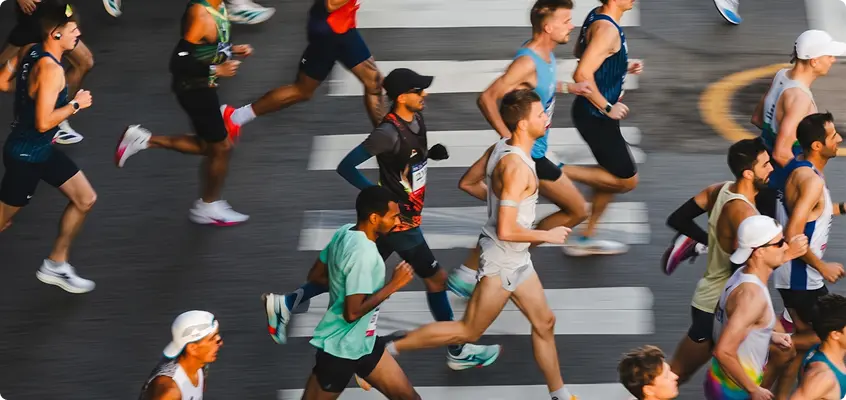
An Ironman finisher and an MMA fighter both finish a hard block and want to feel normal again. The damage is not the same. One is thousands of repetitive muscle contractions over 8 to 17 hours. The other is impact, grappling, and for many fighters, a weight cut. Treating them the same is the first mistake.
Ironman: the damage is real, and it fades slower than you feel
A Western Australian case study followed one trained triathlete after an Ironman. Peak oxygen uptake, efficiency, strength and jump performance dropped by 4.5 to 54%, then returned to baseline over 15, 8, 2 and 8 days respectively, with no therapy used. One athlete is not a trend, so look at the larger study. In 42 well-trained triathletes, muscle damage and inflammation markers were still elevated five days after the race, and a few were slightly off baseline at day 19. The practical takeaway is simple. Feeling fine at day four does not mean you are recovered. A Kona World Championship study also tested a short cold water immersion straight after the race and found no improvement in recovery markers at 24 or 48 hours. Rest, food and sleep did the work.
MMA: the weight cut is the hidden recovery cost
A systematic review of combat sport athletes found the biggest rapid weight changes in MMA cohorts, around 7.4 kg or roughly 10% of body mass lost, and a similar amount regained before the fight. A scoping review links weight cutting to small decreases in total sleep time, higher sympathetic activity during recovery, and small reductions in maximal strength and repeated high-intensity performance. That matters after fight night. A fighter who cut hard, took damage and then slept badly has a bigger recovery debt than the soreness suggests. The MMA literature is large (112 studies in one review, with injuries and weight loss among the biggest topics), but the recovery tool trials are small.
What the research says about recovery tools
| Tool | What studies show | Evidence strength |
|---|---|---|
| Rest, sleep, fuelling | Ironman markers settle over days to weeks without therapy. Weight cutting is linked with worse sleep and recovery. | Strongest foundation |
| Whole-body cryotherapy (air) | A review of 16 studies found muscle pain reduced in 80%, but called recommendations preliminary. A Cochrane review found insufficient evidence for soreness or subjective recovery. In judo athletes, 10 sessions over two weeks did not change performance. A small taekwondo pilot found no clear effects. | Mixed to weak |
| Cold in martial artists generally | A systematic review reports moderate evidence for lower CK and cortisol and better strength recovery versus passive rest, mostly from cold water immersion. | Moderate for biomarkers, unclear for results |
| Red light (photobiomodulation) | Reduced pain in injured athletes, but two trials showed no faster return to play. | Promising, inconsistent |
| Hyperbaric oxygen (HBOT) | A rapid review found no reviews on elite athlete injury recovery and no significant effect before or after exercise. A sports medicine review says more research is needed. | Limited for sport |
The honest read: our tools are comfort and soreness options, not proven performance enhancers. Use them on top of rest, not instead of it.
Who uses these tools in elite sport
Use by well-known athletes is an adoption signal, not proof that a tool works, and none of the people below endorse Cryo SubZero. Here is what can be documented. UFC: The UFC announced a multi-year marketing partnership to make a whole-body cryotherapy chamber available to its fighters at the UFC Performance Institute. A Front Office Sports tour of the institute also described a cryotherapy chamber, a light therapy pod, a sauna and a cold pool in its recovery area. Named fighters: A Sportskeeda roundup shows videos and images of T.J. Dillashaw, Urijah Faber, Jorge Masvidal and Cain Velasquez using hyperbaric chambers. That is media reporting, not clinical records, so treat it as evidence of use only. Ironman: Triathlete Lucy Charles-Barclay is quoted by chamber manufacturer Henshaw Sport saying she used its oxygen chamber to help recover from a stress fracture. That is a commercial testimonial, so weigh it accordingly.Independent confirmation of Ironman champions using whole-body cryotherapy is thin, and one survey of triathletes found cryotherapy chambers, float tanks and saunas were among the least used recovery tools and rated among the least effective.
One trade-off to know about: strength work and cold
In a 12-week trial, regular cold water immersion after strength training reduced muscle and strength gains compared with active recovery. For endurance work the picture is kinder. Cold water immersion after sprint interval training did not change the training adaptations in a 6-week study. Both used water immersion, not air, but the timing lesson holds. If you are in a strength block, whether you are a triathlete or a fighter, keep cold sessions away from hard lifting.
Who should check with a doctor first
Some people should not use certain modalities, or need medical clearance first. For cryotherapy that includes cold-triggered conditions, some heart and blood pressure conditions, and pregnancy. For HBOT, ear, sinus and lung conditions and some medications matter. Two points for fighters: If you took a hard head shot and have any concussion symptoms, get assessed by a doctor first. A recovery session is not a concussion plan. We do not support using sauna, heat or cold exposure to cut weight. Dehydration and rapid weight loss add risk, and anyone mid-cut should speak to their doctor and a sports dietitian.
How Cryo SubZero fits into your recovery
We are a recovery clinic in Cheltenham at cryosubzero.com.au, not a replacement for your coach, physio or doctor. Based on the evidence above, this is how we suggest using us. First week after race or fight: sleep, food and easy movement come first. Infrared sauna, red light and lymphatic drainage can help you relax and feel looser, once you are rehydrated and not cutting weight. Sore days: a 2 to 3 minute whole-body cryotherapy session at -110°C, or local cryotherapy on a specific area, kept away from hard strength sessions. Lingering injury: HBOT in our dual-occupancy chamber only as an add-on to your treating clinician's plan, given the limited evidence. Before the next block: a Scaneca 3D body scan for a baseline on posture and body composition to take to your coach.
The honest bottom line
The research backs rest, sleep, fuelling and a gradual return far more than any machine. Our modalities may help you feel better between hard blocks, and we will not promise they make you faster or prevent injury. The evidence does not support that claim today.
Book your recovery session
Level 1, 284 Bay Road, Cheltenham VIC 3192 · 03 9022 6606 · info@cryosubzero.com.au Book at cryosubzero.com.au
References
- Recovery following an Ironman triathlon: a case study. repository University of Tasmania
- Neubauer O, et al. Recovery after an Ironman triathlon: sustained inflammatory responses and muscular stress. Eur J Appl Physiol. 2008. lida.sport-iat.de record
- Bartley JM, et al. Effects of cold water immersion on circulating inflammatory markers at the Kona Ironman World Championship. Appl Physiol Nutr Metab. 2021;46(7):719-726. PEDro record
- Roberts LA, et al. Post-exercise cold water immersion attenuates acute anabolic signalling and long-term adaptations in muscle to strength training. J Physiol. 2015;593(18):4285-4301. pmc.ncbi.nlm.nih.gov/articles/PMC4594298
- Broatch JR, Petersen A, Bishop DJ. Cold-water immersion following sprint interval training does not alter endurance signaling pathways or training adaptations in human skeletal muscle. Am J Physiol Regul Integr Comp Physiol. 2017. ECU Research Online
- Matthews JJ, Stanhope EN, Godwin MS, et al. The magnitude of rapid weight loss and rapid weight gain in combat sport athletes preparing for competition: a systematic review. 2019. BCU Open Access
- Effects of weight-cutting practices on sleep, recovery, and injury in combat sports: a scoping review. pmc.ncbi.nlm.nih.gov/articles/PMC12371904
- Exploratory systematic review of mixed martial arts: an overview of performance of importance factors with over 20,000 athletes. pmc.ncbi.nlm.nih.gov/articles/PMC9227211
- The specific judo training program combined with the whole body cryostimulation induced an increase of serum concentrations of growth factors and changes in amino acid profile in professional judokas. Front Physiol. 2021. pmc.ncbi.nlm.nih.gov/articles/PMC7900507
- Two-week recovery strategies to enhance performance readiness in martial arts athletes: a pilot study. Sports. 2026;14(2). RSU research portal
- Efectividad de la crioterapia en la recuperacion musculoesqueletica de los artistas marciales: revision sistematica. Retos. recyt.fecyt.es/index.php/retos/article/view/102790
- Rose C, Edwards KM, Siegler J, et al. Whole-body cryotherapy as a recovery technique after exercise: a review of the literature. Int J Sports Med. 2017. doi: 10.1055/s-0043-114861
- Whole-body cryotherapy (extreme cold air exposure) for preventing and treating muscle soreness after exercise in adults. Cochrane Database Syst Rev. pmc.ncbi.nlm.nih.gov/articles/PMC9579836
- Morgan RM, et al. Effects of photobiomodulation on pain and return to play of injured athletes: a systematic review and meta-analysis. J Strength Cond Res. 2024;38(6):310-319. PEDro record
- Hyperbaric oxygen therapy for injury recovery among athletes. Penn Medicine Center for Evidence-based Practice rapid review. database.inahta.org/article/32228
- Hyperbaric oxygen therapy in sports musculoskeletal injuries. Med Sci Sports Exerc. 2020;52(6):1420-1426. pubmed.ncbi.nlm.nih.gov/31876671
- UFC names CryoBuilt official cryotherapy partner of UFC Performance Institute. UFC.com. ufc.com/news
- Inside the Octagon: UFC's Performance Institute. Front Office Sports. frontofficesports.com
- What is a hyperbaric chamber and how does it help MMA fighters from damage sustained? Sportskeeda. sportskeeda.com
- Performance and recovery suite, athlete testimonials. Henshaw Sport (manufacturer testimonial). henshawsport.co.uk
- All the gear: the prevalence and perceived effectiveness of recovery strategies used by triathletes. ScienceDirect, 2022. sciencedirect.com